Glass is entrancing and enticing… The lure of the beauty of glass, with its amazing colours, depth and sparkle.
I’m continually learning / experimenting and developing my skills on my amazing glass fusing journey, but I wouldn’t have got where I am without some help from others… it was my friend Sue I have to thank for getting me started on this path in the first place and I was helped by Christine and other members of the Southport Ceramic Artists group where I began fusing glass. Also, some of the other Lancashire glass artists I know, have helped me with kiln advice, plus when I bought my second-hand kiln I was given some helpful kiln notes from its previous owner. My second-hand kiln was still under its 3-year guarantee and Kiln Care who make these kilns, have been a great help (even sending me a new digital controller, when it developed problems on the cusp of the guarantee ending).
The journey has not been without some glitches though… before I got my kiln I was getting quite despondent with many of my wirework glass and other experiments not working out and still, now I continue my learning, especially when I’m trying out new ideas, as many of my experiments can be ‘hit and miss’.
glass and wire experiment – problems with uneven edges
I’m really careful when I’m handling glass, especially cutting glass. To help me to combat my fear of cutting large pieces of glass and also to help develop my skills and knowledge further, I attended the Summer term glass fusing course 2 years ago at Lancaster college.
It really did help me. I had to cut very large pieces of glass and break them with my hands!
The course also gave me the opportunity to have ‘a go’ with other techniques, tools and machinery I’d not used before, such as a circle cutter (I decided this wasn’t for me as I don’t have enough strength in my hands and my circles turned into moons, haha), a grinder and etching paste. We also used a different type of glass, float glass otherwise known as ‘windowpane glass’, which is much cheaper than the type of glass I normally work with.
my moon shape circle piece made at the glass fusing class
Typically, I prefer the most expensive type of glass!
As I love anything that sparkles, I use dichroic glass (combined mostly with coloured glass) in my glasswork, which is ultra-expensive, but very sparkly too.
Thanks for joining me on my creative journey, more to follow…
Sam Rowena, jewellery artist x
Glass is entrancing and enticing… The lure of the beauty of glass, with its amazing colours, depth and sparkle.
Since I began my glass fusing journey back in Spring 2010, I’ve been developing my own unique designs by experimenting and seeing what turns out and then if I’m happy with what I’ve created I turn it into glass jewellery.
Part of my design process is to make pieces of glass that I would like to wear, so in essence, I’m being my own muse and creating jewellery that is to my own taste. As I’m experimenting and developing my own unique glass designs, I’m also creating something that’s a bit different.
my test piece and first venus glass design, that’s part of my own jewellery collection
“I love the vibrant colour, luminescence and sparkle that can be achieved working with glass and my aim is to create unique jewellery pieces that are beautiful, individual and comfortable to wear.”
The beauty of it is that as I continue on my glass fusing journey, my skills, knowledge and design range grows and evolves.
Thanks for joining me on my creative journey, more to follow…
Sam Rowena, jewellery artist x
Glass is entrancing and enticing… The lure of the beauty of glass, with its amazing colours, depth and sparkle.
In the Spring of 2012, I was in a bit of a rut with my glass making, after getting disheartened that many of my experiments over the past 2 years – trying to combine wire with glass – were not working out.
Sometimes the wire had reacted with the glass and it turned bright red with a fuzzy halo around it (not great!) or the wire hangers which were supposed to be outside the glass got submerged inside it. The wire was sandwiched in the middle of the assembled glass pieces, which meant it wasn’t very secure and often moved during its journey to Christine’s kiln (the organiser of the ceramic artist’s group), plus it had uneven kiln firing problems. Anyhow, this ALL resulted in a very low success rate.
If I was to continue with my glass fusing I decided I would have to get my own kiln.
Initially, I looked into getting a general multi-purpose digital kiln, one that could be used for everything, including ceramic painting and glass fusing, although the cost of the kilns new were around £800 (or more), nearly-new second-hand ones seemed to come up quite often on eBay for around £350-500.
“I’m glad I waited and did some further research on the different types of digital kilns”
My kiln research included chatting with other glass artists I knew about their kilns and visiting a local lamp-work glass artist to see the 3 kilns she had. This was a great help, as one of her kilns was specifically for glass fusing and was flatter, than the deeper style multi-function kilns and I could see it would be a lot easier to load up and use. She also recommended the English kiln manufacturer Kilncare for their kilns and after-care service. Following this, I spoke to glass artist Julie Langan at Cedar Farm – whilst I was there teaching a bebeady jewellery making class – and she also spoke highly of the kilns by Kilncare that she used.
The problem was that the cheapest Kilncare kiln was well over £1,000 and my budget was to spend a maximum of £750 on a new kiln, or less if I could find a good second hand one on eBay…
I’d begun researching and watching the ‘digital glass kilns’ that came up on eBay and had decided that if I hadn’t found one by Christmas, I’d get myself a new kiln, the Skutt Firebox glass kiln which was priced around my budget.
Over the months that followed only a few glass kilns came up on eBay and most weren’t that much cheaper than buying a brand new one or were located at the other end of the Country.
I lost out on a Stutt kiln that I was bidding on, as it went at the last minute to the ‘buy it now’ price.
Better was to come later that year. I couldn’t believe it when my dream Kilncare kiln came up on eBay – it was the first time I’d seen one in my year of looking – during my lunch break in the cafe at Barton Grange Garden Centre whilst I was there stewarding an Art and Craft Guild of Lancashire exhibition. With my heart in my mouth, I pressed the ‘buy it now’ for way more than my kiln budget and spent the rest of the afternoon at the exhibition, wondering if I had done the right thing!
A week later, after arranging to pick up and pay for the kiln, I headed on a 2-hour drive down to Stoke for it. The lady selling her kiln was giving up glass fusing and it came with glass, cutters, some moulds and many other bits and pieces. It wouldn’t all fit in my small car, so I had another journey back down to Stoke the following week for the stand and the rest of the things.
Wow, I was over the moon, I’d finally got my dream kiln!
glass fusing
I was quite scared to use it at first… but it came with programmed settings and a logbook, so I put a few pieces in, started writing notes and my experimenting journey began.
Thanks for joining me on my creative journey, more to follow…
Sam Rowena, jewellery artist x
Glass is entrancing and enticing… The lure of the beauty of glass, with its amazing colours, depth and sparkle.
I’ve long been attracted to the lustre and beauty of glass and crystal beads, learning about and collecting them to use in my jewellery making. From vintage hand-cut crystal beads, machine cut Swarovski crystal beads, pressed glass bohemian glass beads and Japanese seed beads, to gorgeous handmade lampwork and Murano glass beads.
“When I first came across Dichroic fused glass jewellery at a craft fair in the late 1990’s I was amazed by its beautiful sparkle and vibrant colours.”
At the time, there didn’t seem to be any opportunities to learn how to do it (glass fusing) in Lancashire, plus I was engrossed with learning about beads and developing my jewellery making skills. I think it was around 10 years ago when people started teaching the glass fusing classes here. They were so expensive and the cost of it put me off, but I still hankered to have ‘a go’ and luckily in 2010 a friend told me about a kiln/ceramic art group in Southport and I went along with her.
and that’s when my foray into the world of glass fusing began…
The group initially had weekly morning ceramic painting meetings in a church community room with additional day-long seminars every month or so. The group organiser, Christine fired the ceramic paintings in her kiln each meeting. As glass is fused in a kiln, it was also something they covered in the group and I was able to gain the basics of glass fusing and have the opportunity to learn by experimenting and seeing how being fused in the kiln transformed my pieces of assembled glass. (I also enjoyed the ceramic painting I did at the meetings and seminars, I’ll write more about that in a later blog post).
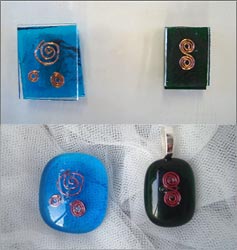
2 glass pieces before and after being in the kiln
This is an early ‘before’ and ‘after’ glass experiment with wire, these were 2 of the ones that turned out OK!
My glass fusing pieces were very ‘hit and miss’, firstly they were mostly new experiments, they also had to survive being moved by car and then loaded into a kiln, and finally the ceramic kilns are big top-loader kilns with varying ‘hot and cold’ spots and unfortunately it resulted in mixed success.
I knew that if I wanted to take my glass fusing further I really needed to get my own kiln.
Thanks for joining me on my creative journey, more to follow…
Sam Rowena, jewellery artist
Why bother doing art and craft events? What motivates us – the artists and makers – to do them?
I think its much more interesting to purchase something handmade and be able to chat with the maker, instead of purchasing something mass-produced from the high street or on the internet. At events, you get to see my work displayed, chat with me about particular pieces that you like, and find out more about them. It makes it a much more personal purchase.
“I enjoy chatting to people about what I do and taking part in art and craft events.”
Winter Arts Market at St Georges Hall, Liverpool
Although the main motivation for taking part in events, is for the opportunity to promote, display, and sell my work, there are other reasons too…
Like most designer-makers, my work is quite insular, so an event is a great opportunity to meet and chat with people, both customers, and other artists/crafters. Over the years, it’s been lovely that a number of friendships have blossomed out of chatting with my neighbouring stallholders at events. If I get a chance, I also enjoy taking a quick look around the art and craft stalls, to see who’s there are and say hello. I love seeing how everyone displays their work, the innovative and creative ways of using their limited space.
One of the things I don’t do is ‘sell’. I don’t like pushy salespeople and think there is nothing worse than people being hassled to buy something when they are just having a day out and enjoying looking around an art and craft fair. So, my work has to sell itself and I just help it out.
“Its really a great confidence booster, when people like my work and compliment it, and even better when they like it enough to purchase it!”
one of my beaded brooches made at my Easter event
I prefer to be busy at an event, so if an event has quiet spells, I’ll do some making, either my abstract beaded wire brooches (as they are easy to ‘pick up and put down’) or wirework shapes. I’m happy then as I get in my own creative zone and time flies. Plus it has other advantages too, as visitors are usually intrigued with what I’m making, and its a good way of starting conversations.
At some events, I only have a 6ft table and my making tends to be more hidden from view, but at other events, such as the ‘Art in the Pen’, ‘Handmade in Lancashire and at my jewelart pop-up events I have a bigger area and my making becomes part of the display.
my making/leaflets table at Art in the Pen
Occasionally I take part in charity fundraisers, so my being there is also helping out a good cause.
A highlight for me is that I get to visit and enjoy the atmosphere of some amazing venues. These range from gorgeous gardens to interesting buildings rich in histories, such as St Georges Hall in Liverpool and Lytham Hall in Lancashire. There is a lovely buzz about these places when they are filled with amazing arts and crafts and the hubbub of people chatting, admiring the stalls, and making purchases.
Thanks for joining me on my creative journey, come along and visit me at one my events,
Sam Rowena, jewellery artist x
After all the preparation work is done and you’ve been successful and got a stall at some art and craft events you’ve applied for, then the real work begins… It’s not just about ‘the making’, there’s sorting out your stall display, designing and getting business cards/leaflets printed, buying your packaging etc.
On the day of the event, once you’ve arrived and found where your stall is, there’s the unloading and moving everything, before setting up your stall display.
at the Winter Arts Market St Georges Hall, Liverpool
“Ideally, if I’ve got time before the event opens to the public, I like to take a quick look around the venue and see who’s there and say hello to the other stallholders that I know, but sometimes it has to wait until quiet spells later on in the day.”
Art and Craft events are very ‘hit and miss’. There are many factors outside of your control…
The weather
Outdoor events are often a wash-out if its bad weather, raining and windy, not to mention the potential to damage your art and craft. But equally, in the summertime, if its lovely weather, people don’t want to be indoors visiting an event.
Footfall
If its a new event in a venue that doesn’t have a good footfall, it can often take a while for it to get established and attract visitors.
Too many similar types of stalls
Some events aren’t selective, they just want to fill the stalls. It’s better for an event to have a good variety of different work, to attract visitors to the event. “This happens all the time to me – with jewellery – and although its usually all different work, there are only so many people that are going to buy jewellery at an event.”
Hobby-makers and bought-in work This makes it really difficult for the artists and designer-makers who are trying to make a living from their art/craft as you can’t compete price-wise with the hobby-makers or work that’s been mass-produced in other countries. “I now mostly try to take part in art/craft events where there’s been a selection process involved.”
Stall location
If your stall is in a corner or your neighbouring stall has a card spinner or clothes rail in the space between the stalls, your stall can easily get blocked by people looking at their stall. “This is really frustrating and has happened to me at events many times. I usually give it a few minutes grace, and then if my stall is still being blocked I go out and ask them to move so that I can get to my stall display and tidy it up.”
The time of year
The run-up to Christmas is the best time of year, as many visitors are buying Christmas presents. At other times of the year, it depends on whether visitors have a reason to buy ie. birthday presents or see something they like and either want to treat themselves or are with someone else that wants to treat them.
rainy and windy day at the Liverpool One Arts Market
When an event doesn’t work out, it’s hard not to take it personally and think that people don’t like what you make.
Figure out why your work hasn’t sold at that particular event and if it’s one or more of the above factors, or if there might be things you can improve upon, ie. your display, range of pricing, negativity etc. You can use each event as a marketing opportunity to see what does sell, what are visitors interested in, what comments and feedback you get and use it to give out your leaflets and business cards. A visitor who is interested in your work, might not be ready to buy at this event, but might come to another event later on and buy from you then.
Its all part of the learning curve, you have to try out different events to find the ones that are right for your work.
If it’s not busy, it’s nice to get to know the artists, designer-makers and craftspeople on your neighbouring stalls, see what they make, chat about events, marketing etc and help each other out if you need to leave your stalls.
“Over the years, I’ve tried out many different types of events and some just don’t work for me… these include family fun days, school fairs and vintage (with a bit of handmade) events, so I leave these events for others to do.
“I hope this information is both interesting and helpful for other artists, designer-makers and craftspeople doing events and visitors to the events.”
Thanks for joining me on my creative journey,
Sam Rowena, jewellery artist x
What drives us, as artists, designer-makers and crafters to follow this path of creativity and what do we enjoy about it?
I think this is a topic of interest to everyone, but its something I find especially intriguing, as my family aren’t creative or much interested in art and don’t quite understand ‘why I do what I do’, so I’ve posed the questions to myself and fellow artists/crafters taking part in our Handmade in Lancashire this Easter at Barton Grange Garden Centre.
Why do you do what you do?
What do you enjoy about it?
“Since I was little, I’ve always enjoyed being arty and creative, and over the years I’ve explored a whole range of different arts and crafts; from theatrical stage make-up for school plays as a teenager, learning graphic design, digital photography and silversmithing at college (and working in design), painting on silk, ceramics and watercolours, to creating fused glass and jewellery making. Over time you discover which things you excel at and enjoy doing the most.
“Although, the creative path is definitely not the easiest way to earn a living, its very rewarding in many other ways. Every day is different – you become the designer, maker, photographer, promoter, seller and the list goes on – the actual making is just a small part of it. My favourite part is the feeling of achievement you get when you make a piece of jewellery or glass and other people love it too, want to buy it and wear it. I feel so honoured when I see people wearing one of my pieces and returning to buy more.”
“I do what I do because I enjoy it and I can get lost in the challenge of seeing the blank canvas develop. I enjoy watching my initial idea evolve, and how the colours merge to create the finished picture.” Lily Batteson – www.lilybatteson.com
“After being made redundant from my dental job in February 2013 I decided to start up my own business combining all of the skills learned as a Dental Technician with my Artistic abilities and I’ve been making a living as a Glass Engraver for the past two years… after all Teeth are made of Glass! I enjoy the challenges of creating bespoke pieces… every day is different. I also love to meet people so networking is a big part of my business and it has replaced something that I miss now that I work alone, which is meeting people and working with others.”
Alexis, Walking on Glass – www.walkingonglass.co.uk
“I first started sewing, aged 8, making dolls clothes and progressed through my teenage years onto making my own clothes (not always successfully!) However, bags are far more forgiving than clothes as one size fits all.” Zylpha, Zed Bags
You can meet and chat to us, see a selection of our work and take the opportunity to buy direct from us and the other Lancashire makers taking part in the Handmade in Lancashire at Barton Grange Garden Centre, Easter Friday and Saturday.
Later this spring I will be doing some follow-up post on the creative path,
Sam Rowena, jewellery artist x
A lot of work goes into taking part in art and craft events and it begins months before the actual event. You wouldn’t believe how organised we have to be, and it isn’t something that normally springs to mind when you think of artists and craftspeople, as we tend to have a reputation of ‘having our heads in the clouds’!
Its planning, researching, organising and completing the applications and then once you’ve been selected for the event, paying for them.
This is how my year starts…
The first few months each year, I start to plan my year ahead. It involves creating a calendar planner, listing all the weekends from Easter to Xmas and pencilling in potential events, teaching dates, holidays, etc.
I begin with a review of the events I’ve done the previous year; looking at which ones worked, which didn’t, which are borderline because they might have been affected by the weather or had other problems and I might give them another go. This is followed by researching other events as potential ones to apply to and then listing them all on my weekend planner. Sometimes popular weekends might have a clash of multiple events and I have to make a decision of which event might work best for me.
Before I can start applying for events, I choose a selection of photos, from photographs I’ve taken during the previous months/year and I update my 100-word artist statement and artist CV. For some events you only need to send this information once, others you need to complete application forms and send it every time, alongside proof of your public liability insurance and sometimes a Risk Assessment as well.
one of my jewelert photos for applying to events in 2016
Application deadlines vary from event to event, some might have deadlines 6-9 months before the event, others maybe 3 months. After applying, then it’s waiting to see if you’ve got in, then it’s sorting out paying for them.
April/May and September/October I try and keep one or two weekends available for teaching classes and pencil in potential dates on my calendar.
By now my planner is starting to fill up, so I have to make sure I put weekends off and holidays down on it too… otherwise you find your actually going to be working every weekend!
Thanks for joining me on my creative journey,
Sam Rowena, jewellery artist x
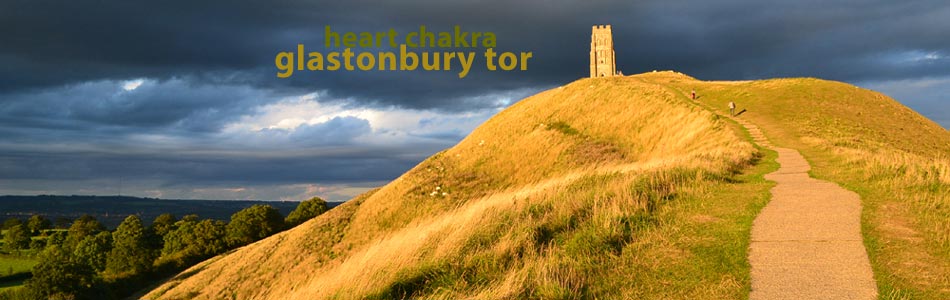
Glastonbury Tor is known as one of the most spiritual sites in the country, an ancient sacred place, magical and bewitching, surrounded by healing energies, myths and legends. Join me on my journey of discovery.
The name Glastonbury Tor from Wikipedia:
The origin of the name “Glastonbury” is unclear, but when the settlement was first recorded in the late 7th and early 8th centuries it was called Glestingaburg.‘Glestinga’ may derive from an Old English word or Celtic personal name, for a person or kindred group named ‘Glast’. ‘bury’ is Anglo-Saxon in origin and could refer to a ‘burh’, a fortified place or more likely, a monastic enclosure. ‘Tor’ is an English word referring to a high rock or a hill, deriving from the Old English ‘torr’. The Celtic name of the Tor was Ynys Wydryn, or sometimes Ynys Gutrin, meaning ‘Isle of Glass’.
Somerset
“Somerset is Gwlad yr Haf in Welsh and Gwlas an Hav in Cornish, which mean ‘Country of the Summer’. “
Perhaps known as a summer country due to the Somerset Levels flooding annually.
The Somerset and Glastonbury landscape has changed dramatically over the centuries. Its been affected by the changing sea levels, as well as the man-made changes of the Romans, Anglo-Saxons and others trying to reclaim land from the sea.
special light and atmosphere
Ancient civilizations at Glastonbury
There is evidence of ancient people visiting Glastonbury for over 10,000 years. (Upper Palaeolithic, Mesolithic and Neolithic periods) Flint tools and a green stone axehead were discovered buried at the top of the Tor.
After the ice age, the sea levels rise and the sea would have been closer to Glastonbury. Around 4500 BC the sea levels sink and the area of the Somerset levels would be a salt marsh, peat and fen bogland. Around 1200 BC the climate becomes wetter and the Somerset Levels increasingly flood.
A route that’s been discovered, a raised trackway through the marshland, known as the ‘Sweet Track’, was built around 3800BC and is believed to be the earliest constructed roadway.
recreation of Glastonbury Lake village on display at the tribunal
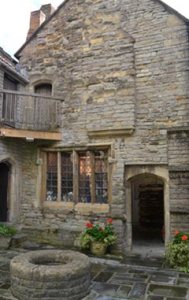
An early Iron Age Glastonbury Lake Village was discovered in 1892 and many of the finds and information about it are on display at the Glastonbury Lake Village Museum at the Glastonbury Tribunal (a 15th Century stone townhouse / Merchants House with an early Tudor façade) in Glastonbury. The Glastonbury and Street tourist info centre is on the ground floor.
at the rear of the Tribunal
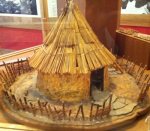
This village created on a man-made island in the marshes dates to around 250 BC and was occupied until around 50AD when the water levels begin to rise again.
a model of a village hut on display at the tribunal
Discovered among the excavations are 5 amber and 27 glass beads, bronze, wooden items and pottery.
Mystical and magic Glastonbury Tor Glastonbury Tor would have been a mystical place rising out of the surrounding seawater marshes and lakes and this is where its links to the legendary mythical Avalon come from. In Celtic folklore Avalon was a high hill surround by water, its believed to be the isle of enchantment, a place between the living and the dead.
There are many other well-known myths and legends surrounding Glastonbury, including:
King Arthur and his Queen Guinevere’s burial in the grounds of Glastonbury Abbey.
The first wattle and daub church being built on the site of Glastonbury Cathedral in the first century by Joseph of Arimathea. On a later visit, his staff on being thrust into the ground grew into the sacred Glastonbury thorn bush and he brought with him the holy grail – the chalice cup – with him to Glastonbury and buried it below the Tor, whereupon healing spring water began to flow at the Chalice Well.
The terracing around Glastonbury Tor is a maze or labyrinth pattern that was used as a symbolic pilgrimage route up to the top of the Tor.
It’s a place associated with the Goddess Birgit.
A spiritual place For thousands of years, Glastonbury Tor has been a religious place of worship. Although much of the archaeological evidence would have been destroyed when the top of the Tor was levelled in the 10th or 11th Century to build a larger church, some items have been discovered on the Tor.
the buried Neolithic flint tools found there are believed to be votive offerings
two skeletons excavated in the 1960s displayed a burial ritual typical of the Romano-British period and might indicate there had been a temple on the Tor
6th Century pottery
part of a 10th/11th Century ‘sun/solar cross’
Inside St Michaels Tower
There is some evidence to prove that around 450 AD Celtic hermits briefly lived on the Tor and in the 7th Century that Saxon monks or hermits built 2 small cells and possibly a wooden chapel there. Followed by the large stone church, which was destroyed by an earthquake in 1275 and was rebuilt smaller in the 1320s, this lasted until the dissolution of the monasteries by Henry the 8th in 1539 and the execution of the Abbot at the Tor. The church was quarried for its stone and now the landmark St Michael’s Tower is the only building from the original St Michaels church that is left on the top of the Tor. It continues to keep watch over the surrounding countryside.
golden light landscape
Energies, ley-lines and portals
There is strong energy at Glastonbury Tor, it’s a sacred and ancient place that is in tune with the earth rhythms and its energy flow. I believe that many of us in our modern world have lost our natural connection to the earth and our knowledge we possessed in ancient times.
Glastonbury Tor certainly has a lot of special energy surrounding it and I’ve found out from my research that its placed at a major intersection of the earth’s ley lines, as well as being one of the Earth’s main energy gateways. The St Michael’s and St Mary’s ley lines run through Glastonbury Tor and it’s a portal for the Heart and Crown Chakras.
There are many websites with further info on the history of Glastonbury and its folklore, myths and legends. These are just a few that I’ve visited in my quest for knowledge:
I have enjoyed my journey of discovery, learning about Glastonbury Tor and look forward to further discoveries on my next visits, now that I’ve gained a deeper knowledge…
Sam Rowena, jewellery artist x
Healing springs and wells are magical ancient places, throughout time they have been revered, a place of pilgrimage, with many traditions and myths surrounding them.
The Springs at the base of Glastonbury Tor are well known to have strong spirit energies perhaps these are enhanced by the Michael ley line passing through them.
The red spring, otherwise known as the Chalice Well is iron-rich and when left to settle will have red ‘iron’ sediment in it. The taste is also quite strong and earthy.
The white spring has calcite and flows from the limestone caverns beneath Glastonbury Tor, according to records left by a local in the 1890s this lime was said to calcify objects left in it, perhaps similar to Mother Shipton’s petrifying well in Knaresborough, Yorkshire. The water is lighter in taste than the red spring water and more akin to the taste of spring water.
There is evidence that for over 2,000 years people have come to these Springs, a place of wonder (with a constant flow of mineral water) where they worshipped the native spirits.
the white well reservoir
Originally, the white spring was in a wooded glade until it was turned into a reservoir and a well house was built by the Victorians in 1872 in order to bring pure clean water into Glastonbury. Due to the water pipes calcifying and becoming blocked it wasn’t in use for very long and became disused.
Over the past 10 years or so, it has gradually been transformed into what we find today by its guardians, the Companions of the White Spring. The primary purpose of the temple is to honour the spirits of the White Spring.
Quote from their website, “It is an expression of gratitude for the gift of pure water. It is a sanctuary, a place of reflection, inspiration and healing. It is a sacred site of great depth and beauty. It is a living temple. visit their website for more info
Pools have been built inside the well house using the principles of sacred geometry and simple shrines to honour the ancient energies and spirits of Avalon. It’s lovingly created, cared for and supported by the companions of the white spring.
I for one, love my visits there and am thankful for being given access to this magical ancient place and grateful to the time that the volunteers and companions give up to enable us to visit and share in the beautiful energy of the White Spring.
Since my last visit to Glastonbury Tor and my experiences there in October 2015, I’ve researched the Tor further, read my next post on it…
Sam Rowena, jewellery artist x









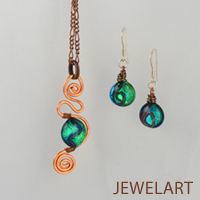 “Although, the creative path is definitely not the easiest way to earn a living, its very rewarding in many other ways. Every day is different – you become the designer, maker, photographer, promoter, seller and the list goes on – the actual making is just a small part of it. My favourite part is the feeling of achievement you get when you make a piece of jewellery or glass and other people love it too, want to buy it and wear it. I feel so honoured when I see people wearing one of my pieces and returning to buy more.”
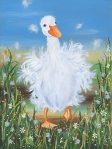 I do what I do because I enjoy it and I can get lost in the challenge of seeing the blank canvas develop. I enjoy watching my initial idea evolve, and how the colours merge to create the finished picture.”
 I enjoy the challenges of creating bespoke pieces… every day is different. I also love to meet people so networking is a big part of my business and it has replaced something that I miss now that I work alone, which is meeting people and working with others.”



 jewellery artist
You must be logged in to post a comment.